

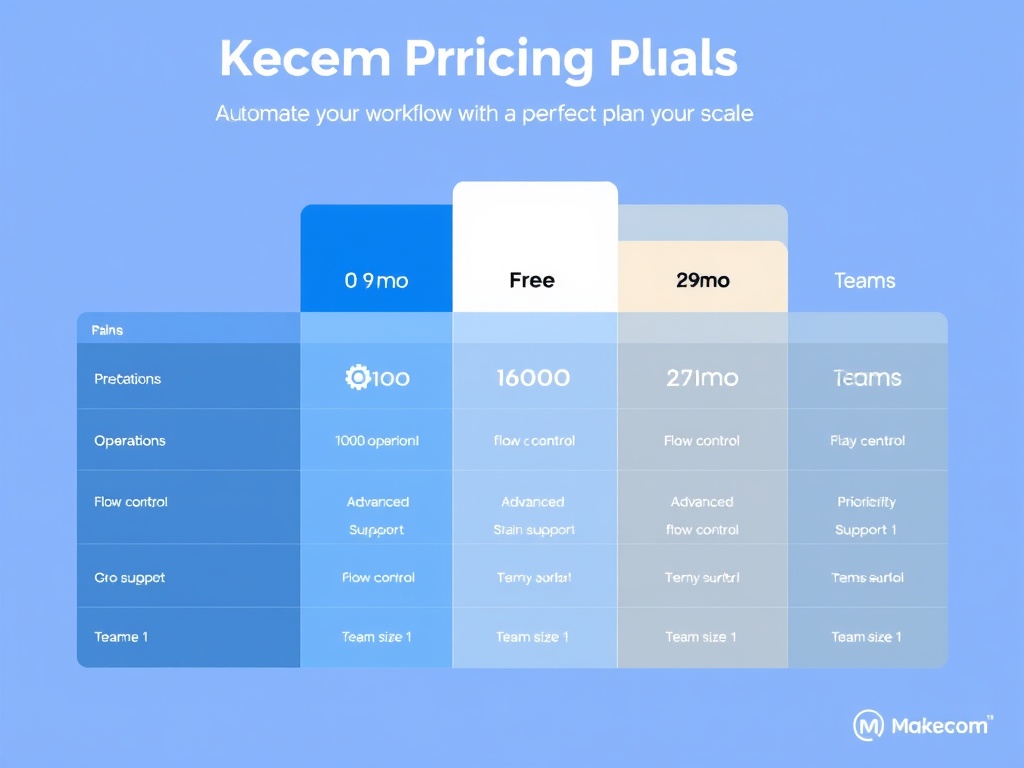
Make.com pricing is a crucial consideration for businesses and individuals looking to automate their workflows efficiently. Deciphering the complexities of pricing tiers and credit systems can be challenging, but this guide promises to provide clarity and actionable insights. If you want to optimize your spending and select the best plan for 2026, this article will help you navigate all the details.
Understanding how make.com pricing plans work, along with the differences between credits and operations, allows users to make informed decisions and maximize value. Whether you are new to automation or looking to switch from a competitor, this guide delivers comprehensive knowledge to help you save money smartly.
What Is Make.com Pricing
Make.com pricing refers to the cost structure of the Make automation platform, which enables users to create complex workflows that integrate various apps and services. The pricing includes several plans categorized by usage limits, feature access, and operational credits, which dictate how many tasks can be run. This model has evolved from a traditional operations count to a credit system to provide more transparency and flexibility. According to The Wall Street Journal, pricing AI-powered tools like Make requires innovative approaches given their dynamic usage patterns.
Why Make.com Pricing Matters in 2026
With automation becoming integral to business operations, make.com pricing impacts budgets and workflow efficiency directly. Recent studies show that businesses using AI-driven dynamic pricing models improve cost management by over 20% (Yahoo Finance). As a result, understanding how Make.com adjusts its pricing for 2026 helps users stay ahead and avoid unexpected expenses.
This article ties into other insights from our coverage, including Mistral AI’s Forge Platform, highlighting how emerging AI tech influences SaaS pricing structures today. Knowing these trends ensures users choose plans that match their usage and growth forecasts without overspending.
How To Navigate Make.com Pricing Plans — Step by Step
Step 1 — Review Current Pricing Plans
Start by examining the different Make.com pricing plans in 2026, which include Free, Core, Pro, and Teams, each tailored for distinct user needs based on operations and credits limits. This helps in matching your automation demand with the right plan.
Step 2 — Understand the Credit System Versus Operations Model
Learn how Make.com transitioned from an operations-based pricing to a credit system, where each automation task consumes credits. This shift provides a clearer cost-per-use perspective and aligns better with variable automation volumes.
Step 3 — Calculate Your Expected Usage
Estimate how many credits or operations your workflows might consume monthly to avoid overage fees. Use historical data or try the interactive pricing calculator included in this guide for precise budgeting.
Step 4 — Compare to Competitors
Review how Make.com pricing stacks up against alternatives such as Zapier or Microsoft Power Automate. This comparison helps ensure you’re getting competitive value for your investment without missing feature advantages.
Step 5 — Optimize for Cost Savings
Apply tips such as consolidating workflows, reducing unnecessary operations, and leveraging volume discounts where available. These strategies help maximize ROI and avoid wasting credits.
Best Practices and Pro Tips
Regularly monitor your credit usage to identify patterns and adjust your plan proactively to fit your evolving needs. This prevents surprise charges and keeps costs predictable.
Take advantage of free trials and promotional discounts offered by Make.com to test features before committing to higher-tier plans. This can reduce financial risk and inform your long-term choice.
Use related tutorials to learn advanced automation techniques that optimize operation counts without sacrificing functionality, effectively stretching your credits further.
Common Mistakes to Avoid
Failing to understand the detailed breakdown of credits versus operations can lead to underestimating costs and overspending. Ensure to grasp how each automation action consumes credits.
Ignoring workflow optimization opportunities may cause you to use more credits than necessary. Overcomplicated scenarios increase expenses needlessly.
Not reviewing competitors’ pricing may result in missing out on more cost-effective or feature-rich options. Always perform side-by-side comparisons.
Assuming that all plans include unlimited features can cause unexpected limits to interfere with your automation goals. Always check specific plan restrictions carefully. For more insights on pricing model trends in SaaS, see this Forbes article.
Frequently Asked Questions
What plans are available in make.com pricing for 2026?
Make.com offers Free, Core, Pro, and Teams plans in 2026, each with different credit limits and feature access tailored to various user needs.
How does the credit system work compared to the operations model?
The credit system charges based on credits consumed per task, providing flexible usage, while the operations model counted each task equally, often causing less precise billing.
Is make.com worth the cost for small businesses?
Yes, for small businesses seeking scalable automation, make.com offers competitive pricing and feature sets that justify the investment when optimized properly.
What are common ways to save with make.com pricing plans?
Cost savings come from selecting appropriate plans, consolidating workflows, monitoring credit use, and applying discounts or free trials.
How much does make.com cost per month on average?
Monthly costs vary by plan and usage but typically range from free for basic use up to several hundred dollars for teams with extensive automation needs.
What is the difference between make.com credits vs operations in pricing?
Make.com credits represent the new pricing metric based on task complexity and execution, while operations counted tasks without weighting. Credits offer more granular and flexible billing aligned with actual use.
Conclusion
Make.com pricing in 2026 offers flexible options through its credit system and tiered plans suited for various user segments. Understanding these details allows you to choose the plan that best fits your automation volume and budget.
Start leveraging our insights and the provided tools to optimize your Make.com costs today and stay ahead with smart automation strategies. For more detailed features, explore our OpenClaw AI features and use cases.

